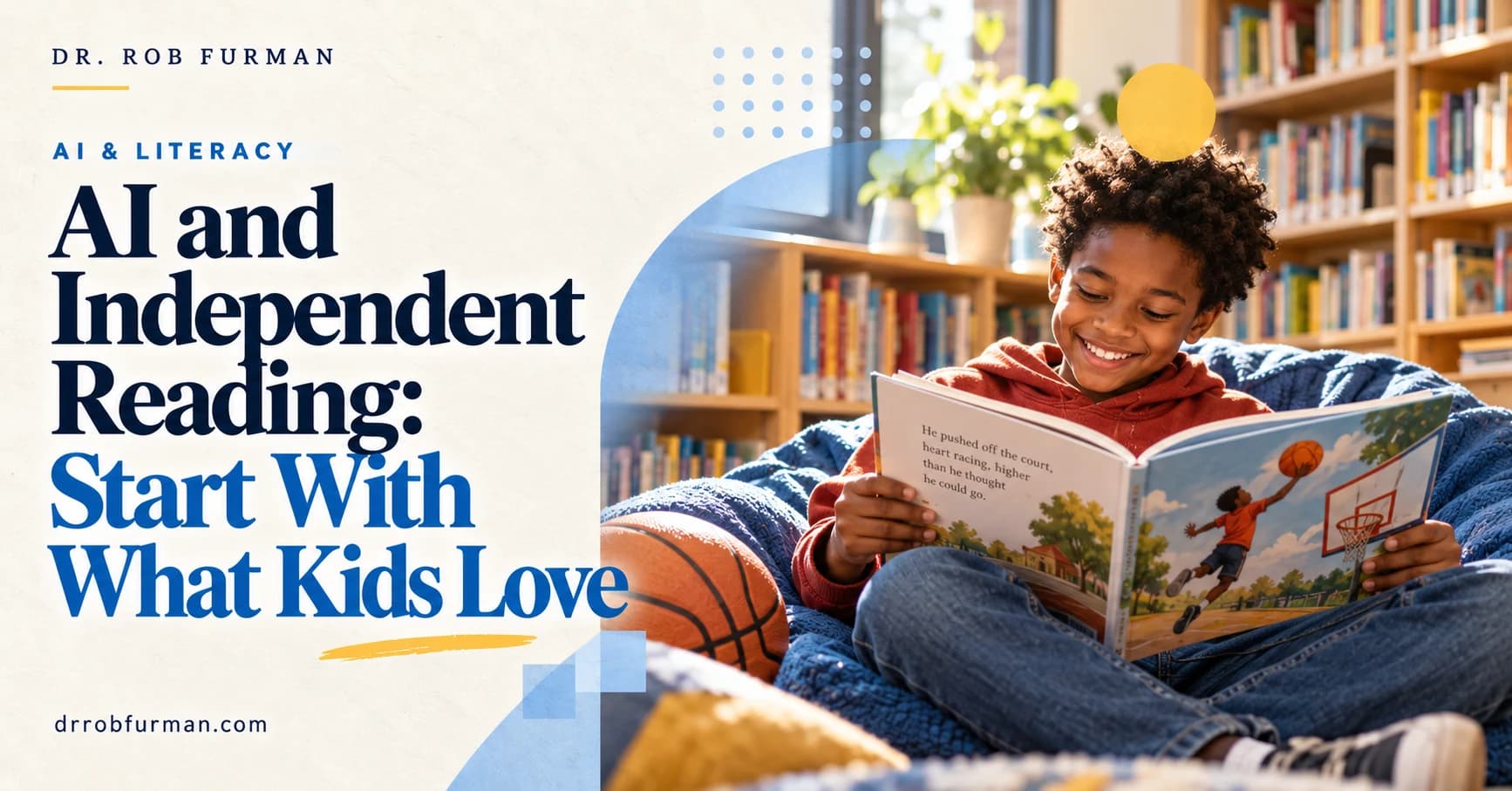
When a child tells me, “I hate reading,” my first thought is that we need to help that child find something worth reading to them.
Kids see commercials for movies. They see commercials for video games. Books rarely get that kind of attention in their world. I talk about this in my presentations because we sometimes expect children to love reading without helping them discover what is out there.
If a child can read independently, finding something that connects with their interests is a great place to start. That is also where I see a useful role for AI.
Let the interest lead
Imagine a child who loves basketball but avoids books. Start with basketball. You do not have to convince that child to care about something completely different before the reading can begin.
Give AI an approximate reading level and ask it for possibilities: fiction about a basketball team, nonfiction about a player, magazine articles, or graphic novels. Then let the child see the choices. AI can help narrow the search, but the child should have a say in what they pick up.
A prompt could look like this:
Suggest five real books or short articles for a child who loves basketball and reads independently at approximately a third-grade level. Include fiction, nonfiction, and an illustrated option. Give the title, author or publisher, and a short explanation of why each might interest the child. Identify anything you are uncertain about.
Check that the titles exist, look at the actual text, and work with a librarian or teacher to find a good fit. A label from AI does not tell you everything about how a particular child will experience a book.
And then comes the part we cannot skip: get the reading into the child's hands. A great recommendation is not much help if the child cannot access it.
The page matters, too
Reading is reading. A basketball magazine counts. A comic counts. A graphic novel counts. I do not want a child who has finally found something enjoyable to hear that it is not “real reading.”
Look at Diary of a Wimpy Kid. Jeff Kinney's illustrated series has reached an enormous audience. Its official site reports more than 300 million copies sold worldwide. About Diary of a Wimpy Kid
What I notice is how approachable those pages can feel: some words, an illustration, more words, and room on the page to breathe. An illustration does not have to fill the whole page to make a difference. Short stretches of text can make getting started feel possible.
For some children, opening a book and seeing a wall of words is intimidating. We should pay attention to that. Five words on a page are still words being read. The goal here is to help a child want to turn the next page.
AI gives us another possibility: create an original story around the child's interests. Ask for a short basketball story at an appropriate reading level, with short paragraphs and space for illustrations. Or ask for a comic script with brief dialogue and a clear story. An AI tool that supports images can help with the illustrations, too.
An adult should read the result first. The point is to offer something enjoyable and approachable, not simply to generate more pages.
Protect the pleasure
Independent reading for pleasure is different from reading a textbook to study, memorize, and prepare for a test. When I am talking about pleasure reading, I am looking for a child who enjoys the experience and chooses to keep going.
We can take that enjoyment away surprisingly quickly. Test a child after everything they read, and we turn the book into another assignment. Now it is work. Now it is school again.
Have a conversation instead. People enjoy talking about what they read. Let children talk with each other about a funny moment, a surprising ending, or a character they liked. You can celebrate time spent reading. You can have a group discussion. None of that needs to become a scored response.
Scholastic encourages daily reading and highlights how much text children can encounter through a regular reading habit. The familiar “20 minutes” message is about making room for reading. I would not turn it into a promise of a particular test score—or another reason to attach a test to the book. Scholastic's guidance for families
Children who still need help learning to read deserve that instruction. For children who can read independently, we also need to protect the opportunity to read because they want to.
That is the job I would give AI here: help us discover or create something a child is interested in, make it approachable, and help the adult offer better choices.
Let the child choose. Get it into their hands. Give them time to enjoy it.
Reading is reading.